Table of Contents
⚡ KEY INSIGHTS: Wellness Retreats in India
Wellness retreats in India range from free, silent 10-day Vipassana courses to all-inclusive resort programmes priced in lakhs. First decide whether you want a regimen, such as Panchakarma or Vipassana, that follows a physician's or teacher's timetable, or a spa stay that only asks you to show up.
Panchakarma is a treatment prescribed after a physician's consultation and can include therapeutically induced vomiting and purgation; one Karnataka resort requires at least 21 nights. Before booking, check NCISM registration for Ayurveda doctors, NABH accreditation for AYUSH hospitals with at least 10 in-patient beds, and Yoga Certification Board certificates for teachers. Avoid any retreat that promises to cure a disease. Plan around monsoon landslides in Uttarakhand, pre-monsoon heat in the north, and Ladakh's altitude, and consult your doctor first if you have a medical condition.
| Key term | Meaning |
|---|---|
| Panchakarma | A five-part sequence of Ayurvedic cleansing procedures, prescribed after a physician's consultation |
| Vamana | Therapeutically induced vomiting |
| Virechana | Therapeutically induced purgation |
| Basti | Medicine given through the rectum |
| Nasya | Medication given through the nose |
| Raktamokshana | Removal of blood, for example with leeches |
| Snehana and swedana | Preparatory treatments: oiling the body inside and out, and sweating therapy |
| Abhyanga | Oil massage; on its own it is preparation, not Panchakarma |
| Shirodhara | A Kerala Ayurvedic therapy in which warm oil is poured in a steady stream onto the forehead |
| Vipassana | A meditation technique taught in free, silent 10-day residential courses |
| Ashram | A spiritual community whose guests follow its timetable |
| Karma yoga | Selfless service, part of many ashram programmes |
| NCISM | National Commission for Indian System of Medicine, which keeps the National Register of Ayurveda practitioners |
| NABH | National Accreditation Board for Hospitals and Healthcare Providers, which accredits AYUSH hospitals |
| BNYS | Bachelor of Naturopathy and Yogic Sciences, the qualifying degree for naturopathy practitioners |
In a 2023 survey of 2,661 people who had recently stayed at residential retreats worldwide, the top reasons for going were relaxation and a holiday. In India, a classical Panchakarma programme can include therapeutically induced vomiting and purgation, and at least one Karnataka resort will not run it in fewer than 21 nights.
Information checked on 16 October 2026.
What a retreat in India actually asks of you
Hilton’s 2027 Trends Report found that 82% of travellers in India “actively seek experiences that calm the body and reset the nervous system”. The figure comes from a Morning Consult survey of more than 1,000 Indians, run between 18 May and 1 June 2026. Across all 14 countries surveyed, the figure was 65%.
The calm India sells, though, often sits at the far end of a discipline. A 10-day Vipassana (a meditation technique taught in silent residential courses) course starts each day at 4 am, keeps students silent and on the grounds, and costs nothing. A Panchakarma programme is supervised treatment, prescribed after a physician’s consultation and counted in weeks rather than nights.
So the first choice is not a destination but a kind of stay. A regimen asks you to follow a timetable set by a physician or teacher; a spa stay only asks that you turn up. The two are judged by different standards and priced on different scales, and a first-timer who books one while expecting the other pays for the wrong thing. This guide is part of our Style & Wellness section.
Five kinds of retreat, and what each one asks
Ayurveda and Panchakarma
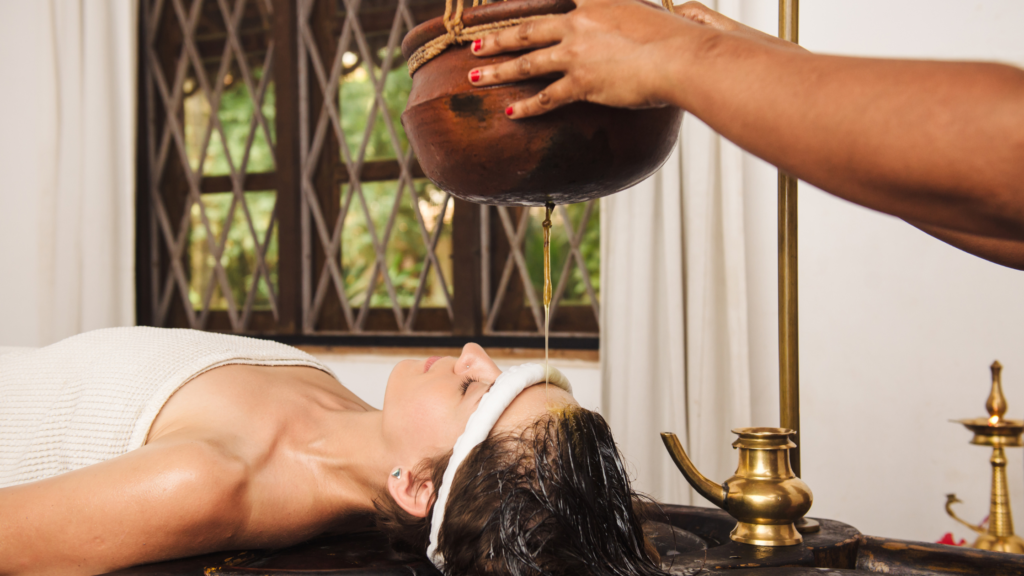
Ayurveda is one of India’s recognised systems of medicine, and its practitioners are registered under the National Commission for Indian System of Medicine Act, 2020. Its most demanding programme is Panchakarma (a five-part sequence of cleansing procedures). The All India Institute of Ayurveda in New Delhi describes the five as:
- Vamana: therapeutically induced vomiting
- Virechana: therapeutically induced purgation
- Basti: medicine given through the rectum
- Nasya: medication given through the nose
- Raktamokshana: removal of blood, for example with leeches
The National Institute of Ayurveda’s syllabus places preparatory treatments before them: oiling the body inside and out (snehana) and sweating therapy (swedana). An oil massage (abhyanga) on its own belongs to that preparation; it is not Panchakarma. Resort programmes say the physician picks which procedures you receive after a consultation, so a package sold as Panchakarma need not include all five. Kerala Tourism calls Panchakarma a rejuvenation therapy; the procedure list reads more like a hospital admission, and both descriptions are true.
Yoga retreats and ashrams
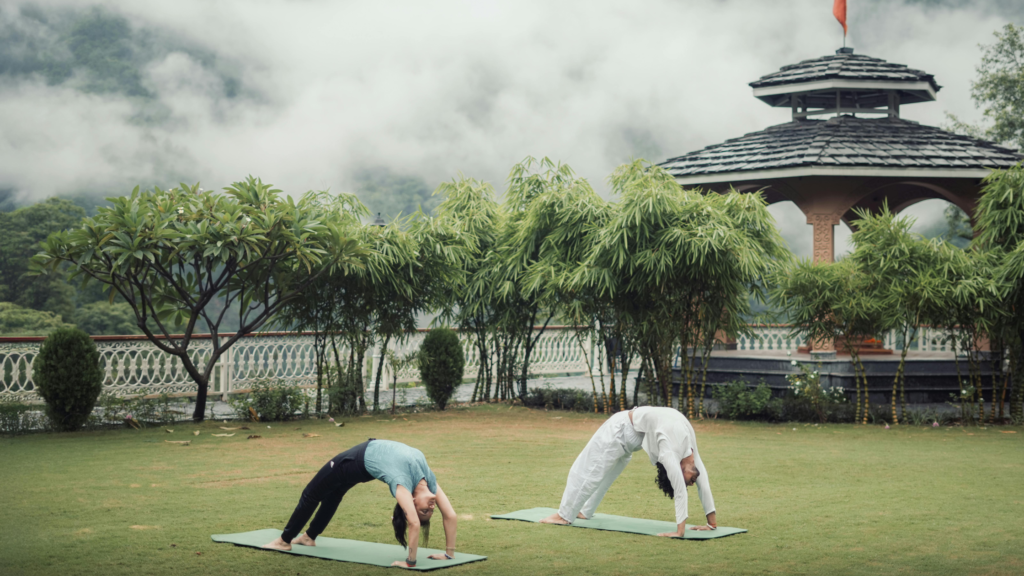
At one Kerala ashram (a spiritual community whose guests follow its timetable), the published programme pairs daily yoga classes with morning and evening meditation. Its syllabus lists karma yoga (selfless service) alongside postures, breathing, and relaxation. Rooms across the same organisation’s Indian ashrams range from dormitories to private rooms. An ashram is a host with its own purpose: the room comes with the schedule, not the other way round.
Naturopathy
Naturopathy is practised in India without drugs; a parliamentary standing committee called yoga and naturopathy a “drugless system” when it urged a national regulator for them. Qualified practitioners hold a Bachelor of Naturopathy and Yogic Sciences (BNYS) degree, and states handle registration because no central law governs the field. Some programmes run as hospitals: one naturopathy hospital in Bengaluru holds NABH accreditation for naturopathy and yoga treatments, the national hospital standard explained in the credentials section below.
Meditation and Vipassana
Vipassana courses in the S. N. Goenka tradition cost nothing. Donors fund them, and they accept donations only from people who have already completed a course. Instead, students pay in discipline. Students keep “noble silence”, which the course rules define as silence of body, speech, and mind, until the morning of the last full day. Men and women are separated, students stay within the course boundaries throughout, and at one Mumbai centre a 10-day course runs from a Wednesday evening to 6.30 am on the 11th day.
Luxury spa retreats
At the top of the market, wellness resorts sell one all-inclusive price. At one Himalayan resort, the rate covers accommodation, consultations before, during, and after the stay, personal sessions, spa treatments, and meals planned for the programme, with government taxes charged on top. Its spa menu lists aromatherapy and hydrotherapy beside Ayurvedic treatments, so ask which items a physician prescribes and which a therapist delivers. The format asks little of a beginner: you choose a programme, and the resort supplies the rest.
What a programme includes, and how long it runs
Price lists in this field quote different things, so compare what is included before you compare numbers. Each row below is one property’s published terms, not a rule for the whole type.
| Programme | What the price includes | Length | Terms dated |
|---|---|---|---|
| Ayurveda hospital, Delhi | Treatment, medicines (not take-home medicines), room, meals, and yoga, in one daily figure | Quoted in 7, 14, 21 and 28-day blocks | Tariff from 1 April 2024 |
| Ayurveda programme, Karnataka resort | Physician’s assessment; up to two treatments a day | Cleansing programme from 14 nights; Panchakarma minimum 21 nights | Programme page; rates valid to 31 December 2026 |
| Panchakarma, Kerala ashram | Physician check-ups; diet, medicines, and massage adjusted as needed | 14 or 21 days; accommodation charged separately | Ashram website, undated |
| Yoga programme, Kerala ashram | Daily yoga classes; morning and evening meditation; selfless service | Not stated | Ashram website, undated |
| Vipassana course | All costs, met by past students’ donations | 10 days; ends early on the 11th day | dhamma.org |
| Luxury Himalayan resort | Room, consultations, personal sessions, spa treatments, and meals; taxes extra | Three-night minimum reported | Time Out, undated; Virtuoso, 2025 |
Three gaps recur in the fine print. Take-home medicines can be extra: the Delhi tariff excludes follow-up medicines. Taxes can be extra: the Himalayan resort’s rates exclude government taxes, and the Delhi hospital adds 5% GST on some rooms.
Cancellation terms can be strict. The Karnataka resort takes 50% at booking and the balance 30 days before arrival, and it refunds nothing for cancellations made less than 20 days out. Read the cancellation clause before you pay, and check whether your travel insurance covers trip cancellation.
How to check a retreat’s credentials
India has official checks for most of what a retreat sells, but each check covers something different, and a property can pass one while falling outside the others.
| What you are checking | The official check | How to verify it |
|---|---|---|
| An Ayurveda doctor | Registration with a state board, then the National Register kept by the National Commission for Indian System of Medicine (NCISM) | Ask for the registration number and the issuing state board, and confirm with that board |
| An Ayurveda or naturopathy hospital | NABH accreditation for AYUSH hospitals, run by the Ministry of AYUSH since 2009, for hospitals with at least 10 in-patient beds; Panchakarma clinics have separate standards | Read the certificate’s scope of services and validity dates; NABH confirms certificates at verification@nabh.co |
| A smaller Ayurveda centre | NABH’s entry-level certification for small AYUSH hospitals and day-care centres | Ask for the certificate and confirm it with NABH |
| A yoga teacher | Certification by the Yoga Certification Board, set up by the Ministry of AYUSH in March 2018 | Ask for the certificate number and level (for example, Yoga Protocol Instructor or Yoga Wellness Instructor); certificates are renewed, so check the date |
| A naturopath | A BNYS degree and registration in a state that registers naturopaths; there is no central law | Ask for both, and for the state that registered them |
| An Ayurveda centre in Kerala | Kerala Tourism’s classification: Ayur Silver, Ayur Gold, or Ayur Diamond | Look the centre up on keralatourism.org |
None of these marks promises how you will feel, and the absence of one doesn’t prove a problem. A resort that is not run as a hospital falls outside NABH’s hospital programme altogether. A mark does tell you who answers for the treatment.
Kerala’s scheme needs one caution. The state revised its classification in 2019 into the Silver, Gold, and Diamond tiers, yet some Kerala Tourism listings still show the older Green Leaf and Olive Leaf labels. Treat an older label as a prompt to ask when the centre was last classified.
Red flags before you pay
Start with the word “cure”. The Drugs and Magic Remedies (Objectionable Advertisements) Act, 1954 prohibits advertisements suggesting a drug can cure the diseases listed in its rules. In February 2024, the Supreme Court restrained an Ayurveda company from advertising products for conditions such as diabetes and high blood pressure. A retreat that promises to cure a disease is making the kind of claim Indian law already restricts for medicines. Walk away.
Next, the consultation. Every Panchakarma programme cited in this guide begins with a physician’s assessment, and at the All India Institute of Ayurveda the procedures follow expert consultation. A package that books you in for purgation before anyone has examined you has skipped the step the whole system rests on.
Then the inclusions. If the quote doesn’t say in writing whether medicines, taxes, consultations, and meals are covered, assume they aren’t, and ask. The table above shows how differently properties count them.
Last, pressure to stay longer. Minimum stays are real: one resort will not run Panchakarma in fewer than 21 nights, and a physician may advise a longer course. But an extension should come with a reason and a written price, and the decision stays yours. An extension offered with a deadline attached deserves the scrutiny you would give any other sale.
Where to go, and when
India’s retreat calendar is set by the monsoon more than by any brochure. The dates below are the India Meteorological Department’s (IMD) normal monsoon dates; the actual onset shifts from year to year.
| Region | Normal monsoon (IMD station) | What to plan around |
|---|---|---|
| Kerala | Onset 1 June (Thiruvananthapuram); southwest monsoon withdraws from South India by 15 October | Kerala Tourism promotes the monsoon, especially July to August, for Ayurvedic rejuvenation therapies |
| Rishikesh and Uttarakhand | Onset 20 June, withdrawal 28 September (Pithoragarh) | Landslides in the monsoon; heat in the plains before it |
| Goa | Onset 7 June, withdrawal 14 October (Panjim) | Programmes vary in the monsoon; confirm yours runs |
| Coastal Karnataka | Onset 4 June (Udupi) | Monsoon on the coast; airports at Hubballi and in Goa |
| Himalayas | Onset 24 June (Shimla), 23 June (Ladakh) | Winter closures at lower centres; altitude at higher ones |
Kerala. Kerala sells its wettest months as its best for treatment. Kerala Tourism says that, according to Ayurveda, the monsoon is the best season for rejuvenation therapies; that is the state’s claim, and the price of it is rain. The northeast monsoon starts in mid-October, so travellers who want dry days between treatments should avoid both monsoons.
⚠️ Monsoon: the southwest monsoon normally reaches Kerala on 1 June and withdraws from South India by 15 October, and the northeast monsoon follows from mid-October (IMD; Kerala Tourism). Expect rain during treatment, and confirm in writing which therapies and outings run in those months.
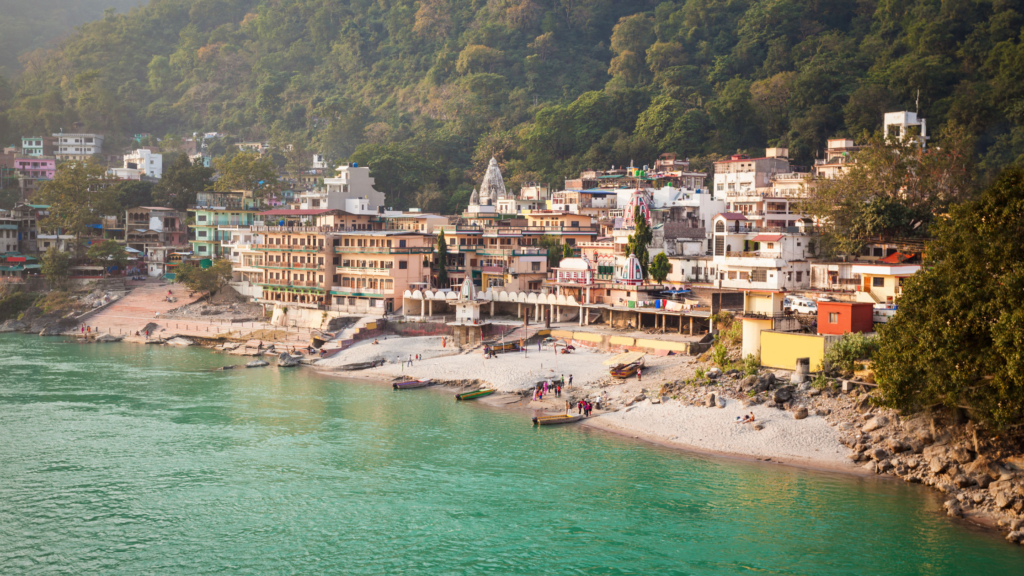
Rishikesh and Uttarakhand. Rishikesh sits where two risks meet: monsoon roads in summer, and plains heat before the rain arrives.
⚠️ Landslide or road closure: the Uttarakhand government suspended the Char Dham pilgrimage on 28 and 29 July 2026 after landslides blocked routes, and asked people to avoid non-essential travel (IANS, 28 July 2026).
⚠️ Heatwave: In May 2026, the Dehradun Meteorological Centre warned of a severe heatwave in districts including Dehradun and Haridwar, with plains temperatures expected above 40°C (News Arena India, 21 May 2026). IMD declares a heatwave in the plains at 40°C or more with a departure from normal of at least 4.5°C, or at 45°C or more regardless (IMD).
If your stay falls in the monsoon, add a spare day to the journey and do not drive mountain roads after dark.
Goa. Retreat calendars in Goa vary by property, and booking platforms list some Goa programmes in September, in the middle of the monsoon. Ask whether a monsoon booking means the full programme or a reduced one.
⚠️ Monsoon: the normal onset at Panjim is 7 June, and withdrawal is 14 October (IMD). Expect monsoon rain in those months, and confirm that your programme runs.
Coastal Karnataka. The Gokarna resort used as a price example in this guide is 170 km from Goa’s Dabolim airport, about a 3.5- to 4-hour drive, and its programme rates include transfers from Dabolim. Hubballi airport, in Karnataka, also serves Gokarna. If you are flying in, compare cheaper flights into both.
⚠️ Monsoon: the normal onset at Udupi, on the same coast, is 4 June (IMD). Expect monsoon rain from June, and confirm that your programme runs.
Himalayas. Lower Himalayan centres keep winter hours. One Buddhist meditation centre above Dharamsala, at 1,888 m, closes every December and January, reopens in February 2027, and names March to June as its peak season; its own guidance warns of one of India’s heaviest monsoons. Higher retreats bring a different risk.
⚠️ High altitude: Leh is about 3,500 m, and Ladakh Tourism advises at least 48 hours of acclimatisation on arrival, with complete rest on the first day (Ladakh Tourism advisory). If you have a heart or lung condition, consult a doctor before travelling above 3,000 m.
What a retreat in India costs
Each price below is one property’s published rate, checked on 16 October 2026 unless a row says otherwise; treat it as a dated example, not an average.
| Band | Example | Published price | Roughly per night | What it covers |
|---|---|---|---|---|
| Free | 10-day Vipassana course (dhamma.org) | ₹0; donations accepted only after a completed course | ₹0 | Teaching, food, and lodging |
| Budget | Guesthouses near a meditation centre above Dharamsala | ₹300 to ₹600 a night, possibly more in high season (centre’s guidance, undated) | ₹300 to ₹600 | Room only |
| Budget | Owner-published Ayurveda packages on Kerala Tourism | 5 nights ₹14,500 to ₹30,000; 6 nights ₹21,000 to ₹35,000 (undated) | About ₹2,900 to ₹6,000 | As listed by each centre; confirm in writing |
| Budget | Panchakarma at Sivananda Dhanwantari Ashram, Kerala | ₹40,000 for 14 days; ₹52,000 for 21 days (undated) | About ₹2,500 to ₹2,900, plus a room | Treatment and physician check-ups; accommodation extra |
| Mid-range | Arya Vaidya Sala Ayurveda hospital, Delhi | ₹91,000 to ₹1,48,000 for 14 days (tariff from 1 April 2024) | About ₹6,500 to ₹10,600 | Treatment, medicines, room, diet, and yoga |
| Luxury | SwaSwara, Gokarna: Panchakarma | 14 days ₹5,37,600 single, ₹8,38,000 double; 21 days ₹8,06,400 single, ₹12,57,000 double (valid to 31 December 2026) | About ₹38,400 single; about ₹29,900 a person sharing | Taxes, consultations, treatments, yoga, meditation, room, meals, and Dabolim transfers |
| Luxury | SwaSwara, Gokarna: naturopathy programme | From 5 days: ₹1,40,000 single, ₹1,50,000 double (valid to 31 December 2026) | ₹28,000 single; ₹30,000 double | The same all-inclusive basis |
For a comfort-level budget, the Delhi hospital sits in the middle: its daily figure, between about a sixth and a quarter of the Gokarna single rate, already includes treatment, medicines, and meals. The luxury rate adds a private villa, scheduled yoga and meditation, and airport transfers.
Two of these prices may change before you travel. The Gokarna rates run only to 31 December 2026, and the Delhi tariff dates from April 2024, so ask each property for a written quote for your dates.
Questions to ask before you book
Send these before you pay a deposit, and keep the written answers.
- Who will assess me, and what is their registration number and issuing board?
- Is the centre NABH-accredited or certified, or classified by Kerala Tourism?
- Which procedures are planned, and which could change after the consultation?
- What exactly does the price include: medicines, take-home medicines, taxes, meals, and transfers?
- What is the minimum stay, and what happens if I leave early?
- What are the deposit, cancellation, and refund terms?
- Are phones, outside food, or visitors restricted during the programme?
- Is a doctor on site at night, and where is the nearest hospital?
- Can I continue my regular medicines, and will the physician speak to my own doctor?
If you are travelling alone, leave your dates and the centre’s address with someone at home; Vipassana courses do not allow outside communication until the course ends.
If you have a medical condition, are pregnant, or take regular medication, consult your own doctor before you book. Tell the retreat’s physician about every medicine you take, and do not stop a prescribed medicine on a retreat’s advice without your own doctor’s agreement.
In an emergency anywhere in India, call 112, the national emergency number, which connects to police, health, fire, and disaster services (Ministry of Home Affairs).
Quick insights: wellness retreats in India at a glance
- A 10-day Vipassana course is free; donations are accepted only from people who have completed one.
- Panchakarma can include therapeutically induced vomiting and purgation, and one Karnataka resort requires at least 21 nights.
- Ayurveda doctors are enrolled with a state board and the NCISM National Register; ask for the registration number.
- NABH accredits AYUSH hospitals with at least 10 in-patient beds; you can verify certificates at verification@nabh.co.
- India has no central law for yoga and naturopathy practitioners; states handle registration.
- A 14-day stay at a Delhi Ayurveda hospital costs ₹91,000 to ₹1,48,000 all-inclusive on its April 2024 tariff.
- Kerala Tourism promotes the monsoon, especially July to August, as the season for Ayurvedic rejuvenation therapies.
Wellness retreats in India: frequently asked questions
Are wellness retreats in India safe?
A retreat in India can be safe if its practitioners are registered and your health has been assessed, but safety isn’t automatic. Check NCISM registration for Ayurveda doctors and NABH accreditation for hospitals. Plan around monsoon landslides in Uttarakhand and Ladakh’s altitude, and consult your own doctor first if you have a medical condition.
How much does an Ayurveda retreat in India cost?
Published examples checked on 16 October 2026 run from about ₹2,500 a day for ashram Panchakarma treatment (before accommodation) to about ₹38,400 a night for a single at an all-inclusive Gokarna resort. A Delhi Ayurveda hospital’s 2024 tariff runs about ₹6,500 to ₹10,600 a day, including treatment, medicines, room, and meals.
How long should a Panchakarma programme be?
Panchakarma programmes are usually sold in 14-day or 21-day blocks. One Karnataka resort starts its cleansing programme with 14 nights and requires at least 21 nights for Panchakarma; the physician decides the procedures after a consultation.
When is the best time for an Ayurveda retreat in Kerala?
Kerala Tourism promotes the monsoon, especially July to August, as the best season for rejuvenation therapies, according to Ayurveda. The southwest monsoon normally reaches Kerala on 1 June, so expect rain; for drier weather, travel outside the southwest and northeast monsoons.
Do I need to be fit for a Vipassana course?
You need reasonable health and the willingness to follow the course rules. The day begins at 4 am; students keep noble silence until the last full day, stay within the course grounds, and the 10-day course ends early on the 11th day.
Can a wellness retreat cure a disease?
No retreat should promise a cure. In India, the Drugs and Magic Remedies (Objectionable Advertisements) Act, 1954 prohibits advertisements suggesting a drug can cure the diseases listed in its rules. Treat any cure claim as a reason not to book, and keep your own doctor involved.